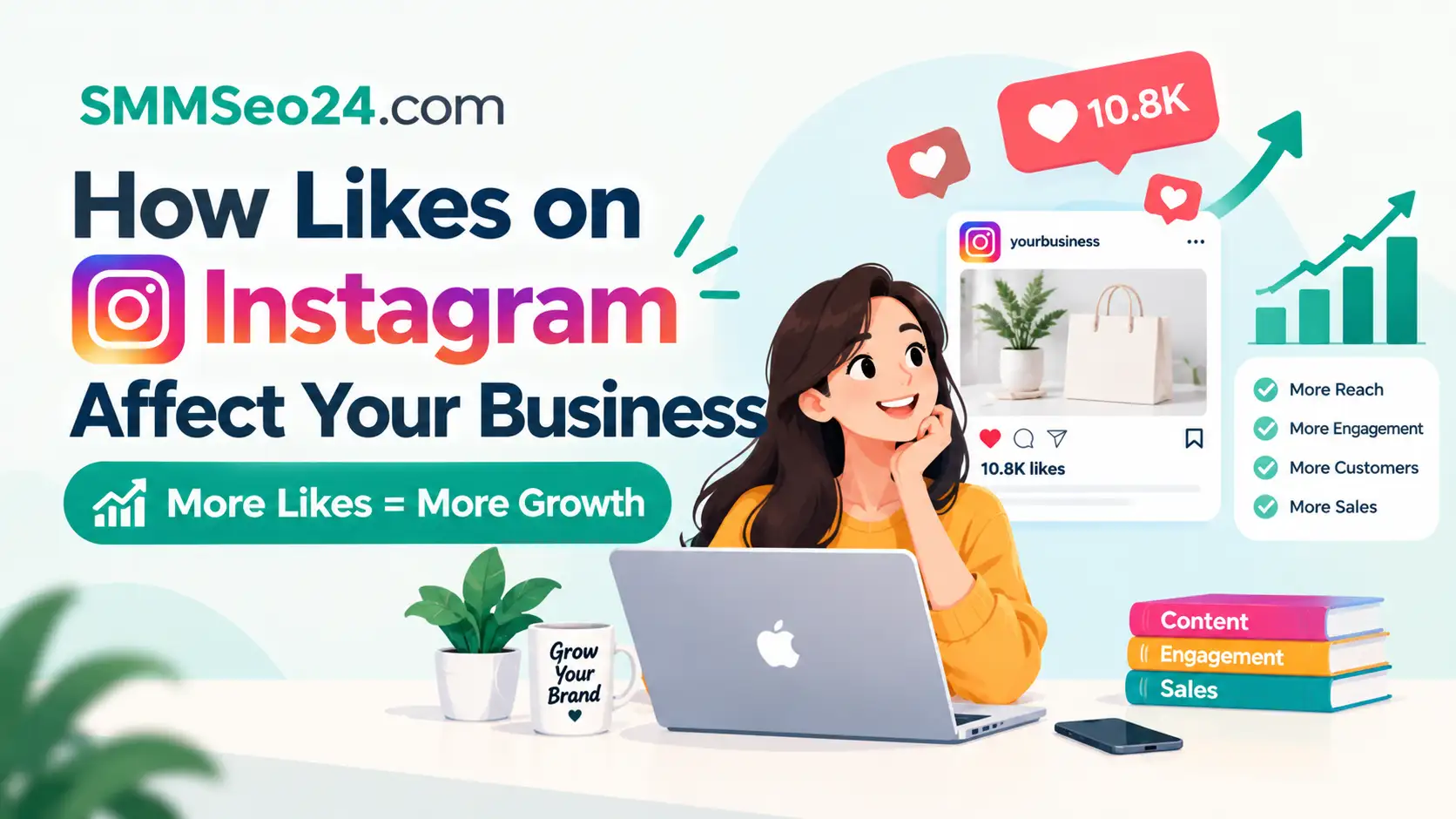
Likes on Instagram affect your business by acting as a public trust signal that shapes whether new visitors follow you, click your link, or buy your product. The reason likes on instagram affect your business comes down to social proof, since people trust accounts that others already trust. A post with 200 likes converts better than an identical post with 5 because the higher number lowers a stranger’s hesitation. This guide covers what those numbers actually change in buyer behavior, which metrics matter more for sales, and where chasing likes costs you real revenue.
SMM & Reputation Growth
Grow Your Brand Online — Faster
Boost your social media presence and build a stronger online reputation with SMMSEO24. Trusted by businesses across the US.
- Fast Delivery
- 24/7 Support
- Secure Checkout
What Instagram likes actually do for brands

A like is a single tap on the heart icon below a post or reel. It tells the account owner that someone saw the content and approved of it. For businesses, likes work as visible social proof. They show potential customers that other people already find your brand worth paying attention to.
This matters most when a stranger lands on your profile for the first time. They don’t know you yet. A grid full of posts with healthy engagement makes them feel safe enough to follow, click your website link, or send a message. Without that signal, they usually leave.
The biggest misconception here is that likes directly equal sales. They don’t. You can’t pay rent with hearts on a screen. Likes build the initial trust that leads to sales later. Think of them as the front door to your shop, not the cash register inside.
Instagram’s algorithm also uses early likes to decide if your post should reach more people. When a new post gets likes quickly from your existing followers, the platform pushes it to the Explore page and hashtag feeds. That extra reach brings in new eyes without you spending money on ads.
If you’re selling high-ticket items, you’ll need fewer likes to look credible than a cheap consumer brand would. Your audience expects a smaller, tighter community.
How to use Instagram likes to grow sales
Getting useful engagement means planning your posts around actions that drive revenue, not just vanity numbers. Follow these steps each time you publish.
- Pick one clear goal before you post. If you want website clicks, write a caption that ends with a specific reason to tap your bio link. If you want direct messages, ask a question that requires a personal answer. Don’t try to do both at once.
- Post when your specific audience is online. Open your Instagram Insights and check the “Total followers” section for active hours. For a US-based retail brand, this often falls between 6 PM and 9 PM local time. Adjust this window if your customers are in different time zones.
- Use 3 to 5 highly relevant hashtags instead of 30 random ones. Instagram’s own creators account advises using a few specific tags so the algorithm categorizes your post correctly. Broad tags bury your content instantly.
- Reply to every comment within the first 60 minutes. This keeps the conversation going and signals to the platform that your post is active. A fast reply often turns a casual commenter into a follower who buys later.
- Share the post to your Stories with a poll sticker. Polls take one tap to answer, which drives up overall engagement. People who interact with your Story are more likely to see your next feed post.
- Track your saves and shares after 48 hours. Go to Insights on that specific post. Saves mean people found it valuable enough to return to. Shares mean they trusted it enough to attach their name to it. Both lead to sales faster than likes do.
- Run a small test budget behind your best-performing organic post. If a post hits 100 likes naturally in 24 hours, put $10 to $20 behind it using Ads Manager to push it to a lookalike audience. Don’t boost posts that failed organically.
The single judgment call that separates good results from wasted effort is knowing when to stop optimizing for likes. If your engagement is high but your website traffic stays flat after two weeks, your content is entertaining the wrong crowd. Shift your focus to posts that solve a specific problem your buyers actually have.
Instagram engagement numbers for small businesses
These figures give you a realistic baseline so you don’t chase impossible targets. The numbers assume an account with under 10,000 followers posting standard image carousels or short reels.
| Situation | What to use | How long | What to watch for |
|---|---|---|---|
| New account (under 1k followers) | 3-5 posts per week | 3-6 months to build trust | Follower growth rate, not total likes |
| Growing brand (1k-10k followers) | Carousel posts with tips | 24-48 hours for peak reach | Save count per post |
| Established shop (10k+ followers) | Reels showing products | First 2 hours dictate reach | Profile visits from the post |
| Selling services or consulting | Text-heavy carousel slides | 3-5 days for slow reads | Direct messages asking about pricing |
| Running paid ads for reach | Boosted top organic posts | 3-7 day ad campaigns | Cost per website click |
| Launching a new physical product | Teaser images then a Reel | 2 weeks before launch day | Link clicks in your bio |
Don’t compare your numbers to massive celebrity accounts. Their audiences behave completely differently. Check your own Insights dashboard weekly to read your actual engagement rate, because the only metric that matters is the one tied to your specific customer base.
Why saves and shares beat likes for revenue
Likes are easy to give. A user double-taps while scrolling fast on the train and forgets your brand ten seconds later. Saves and shares require actual intent. Someone saves a post because they plan to use your advice or buy your product later. They share it because they want a friend to see it. Both actions move people closer to spending money.
You should track your save-to-like ratio on every educational or product-focused post. If a post gets 200 likes but only 2 saves, it was visually nice but commercially useless. If it gets 50 likes and 30 saves, you’ve struck gold. That second post will drive more website traffic over the next month, even with a fraction of the applause.
The order you check your metrics matters too. Look at profile visits first. Then check link clicks. Look at likes last. This forces you to focus on actions that generate revenue instead of feeding your ego. Brands that obsess over the heart count often ignore the fact that nobody is clicking through to their store.
Another detail experienced accounts handle well is the caption length. Short captions work for lifestyle photos where the visual does all the heavy lifting. But if you’re selling a solution to a painful problem, write a longer caption that explains exactly how your product fixes it. Longer captions keep people reading, which increases the time spent on your post. Instagram’s algorithm rewards that dwell time by showing the post to more non-followers.
Finally, don’t delete old posts that didn’t get many likes. A post with 15 likes might still bring in search traffic from a specific hashtag months later. Deleting it removes that quiet entry point to your profile. Leave it alone unless it contains outdated pricing or incorrect information.
Fixing low engagement on your business posts

When your numbers drop, there’s usually a specific mechanical reason. Guessing wastes time. Match the symptom you see in your Insights to the right fix.
| What you notice | What it usually means | What to do first |
|---|---|---|
| Likes dropped suddenly across all posts | Algorithm shifted or your audience is inactive | Check Insights for active hours and adjust posting times |
| High likes but zero website clicks | Content entertains but doesn’t sell | Add a clear call to action telling them exactly what to click |
| Followers grow but likes stay flat | You attracted bots or unengaged users | Stop using follow-for-follow tactics immediately |
| Reels get views but no likes | Hook was good but value wasn’t delivered | Make the payoff match the promise in the first 3 seconds |
| Engagement dies after one hour | Initial followers ignored the post | Ask a direct question in the caption to prompt comments |
If your likes stay low for three weeks straight despite fixing these issues, your content format might be wrong for your niche. A B2B software company rarely needs viral dance trends. Switch to text carousels that teach your audience something they can use at work today.
Platform rules and buying fake engagement
Instagram’s Terms of Use explicitly ban artificial engagement. Buying likes from third-party websites violates these rules. The platform uses automated systems to detect sudden, unnatural spikes in activity from bot accounts.
When Instagram flags your account for inauthentic behavior, they apply action blocks that temporarily prevent you from posting, commenting, or liking anything. Repeated offenses lead to shadowbanning, where your content disappears from hashtag searches entirely. In severe cases, they permanently disable the account. You can read Instagram’s Terms of Use and Community Guidelines to see exactly what behaviors trigger enforcement.
For regulated industries like healthcare or finance, misleading engagement carries heavier risks. The Federal Trade Commission requires clear disclosure of any material connections. If you pay for fake likes to make a medical product look popular, you aren’t just breaking app rules. You’re potentially violating advertising laws designed to protect consumers from deceptive claims.
If you need faster growth, use Instagram’s built-in Promote feature or Meta Ads Manager. These tools let you pay legally to show your post to targeted demographics. You’ll get real views from real people who might actually buy your product. Never hand your password to a service promising instant fame.
Keeping your Instagram momentum going
Consistency beats viral moments for business accounts. Create a simple content calendar mapping out four weeks of posts. Batch your writing and design work on one day so you aren’t scrambling daily.
Track your metrics every Sunday evening. Write down your total profile visits, link clicks, and average saves per post in a basic spreadsheet. You don’t need expensive software for this. Just note the raw numbers so you can spot downward trends before they hurt your sales.
Engagement decays if you stop interacting with your community. Spend 15 minutes a day leaving thoughtful comments on posts from accounts in your industry. Don’t just drop an emoji. Write a sentence that adds to their conversation. This puts your brand name in front of their followers naturally.
Your strategy needs updating whenever Instagram releases a major feature. When they pushed Reels heavily, static image accounts lost reach. When they updated the algorithm to prioritize original content, repost pages suffered. Watch their official @creators account for announcements. If your link clicks drop for two weeks in a row without a clear reason, test a new format immediately rather than waiting for things to fix themselves.
When chasing Instagram likes hurts your business

Focusing purely on likes becomes a trap when it changes what you publish. If you start posting memes or unrelated trending audio just to get the numbers up, you’ll attract followers who don’t care about your product. An audience of 10,000 people who never buy is worse than 500 people who purchase monthly.
This approach fails hard for local brick-and-mortar shops. A bakery in Chicago doesn’t need likes from teenagers in London. Global vanity metrics won’t walk through your door. Instead, focus on local geotags and community hashtags that reach people within driving distance.
It’s also the wrong choice if you sell complex, expensive services. Enterprise software buyers don’t make purchasing decisions based on a vendor’s heart count. They read white papers, attend webinars, and talk to sales teams. If your sales cycle takes six months, spend your marketing hours on LinkedIn articles or email newsletters instead.
Finally, don’t rely solely on Instagram if it’s your only revenue channel. Platform algorithms change without warning. Build an email list by offering a discount code in your bio. Email gives you direct access to your customers that no social media update can take away.
Frequently asked questions
Can buying Instagram likes get my business banned?
Yes, it can. Instagram actively detects and penalizes accounts using third-party services to inflate engagement. Penalties range from temporary action blocks preventing you from posting, to permanent account deletion. Always use official Meta advertising tools if you want to pay for wider reach safely.
Why did my Instagram likes drop suddenly?
Sudden drops usually happen when Instagram updates its ranking algorithm or removes inactive bot accounts from the platform. It can also occur if your posting schedule drifts away from your audience’s active hours. Check your Insights to confirm when your specific followers are currently online.
How long does an Instagram post keep getting likes?
Most organic engagement happens within the first 24 to 48 hours after publishing. However, Reels and posts optimized for search can continue gathering likes for several weeks if they rank well under specific hashtags or keywords. Evergreen educational content typically has the longest lifespan.
Is it safe to use third party apps for engagement?
No, it isn’t. Third-party apps that automate liking or require your login credentials violate Instagram’s terms. Using them exposes your account to hacking and triggers immediate security flags from Meta. Only connect approved partner tools listed in Instagram’s official settings menu.
What happens if I hide my likes on Instagram?
Hiding your like counts removes the visible number from your posts for other users. This doesn’t hurt your reach or algorithmic standing, as Instagram still tracks the data internally. Some brands prefer this to shift customer focus toward comments, saves, and actual website clicks.
How many likes does a small business actually need?
There’s no universal magic number. A healthy benchmark is an engagement rate between 1% and 3% of your total follower count per post. If you have 1,000 followers, aim for 10 to 30 combined likes and comments. Check your own Insights dashboard to track your specific rate.
Do Instagram likes directly increase sales?
Not directly. Likes function as social proof that lowers a new visitor’s hesitation to trust your brand. They help drive profile visits and follows, which eventually lead to website clicks and purchases. Focus on metrics like link clicks and saves to measure actual revenue impact.
Conclusion
Chasing empty numbers drains time you could spend building a real business. Treat your engagement as a tool to earn trust, not a scoreboard to win. Keep your content focused on solving problems for the specific people who hold your credit card, and the metrics that actually pay your bills will follow.

WRITTEN BY
Ryan Thomas
Ryan Thomas writes about online review management, covering review monitoring, customer feedback, ratings, negative reviews, and reputation building. His practical insights help businesses manage reviews effectively, strengthen customer trust, improve their online reputation, and turn feedback into opportunities for long-term growth.
View all posts →